
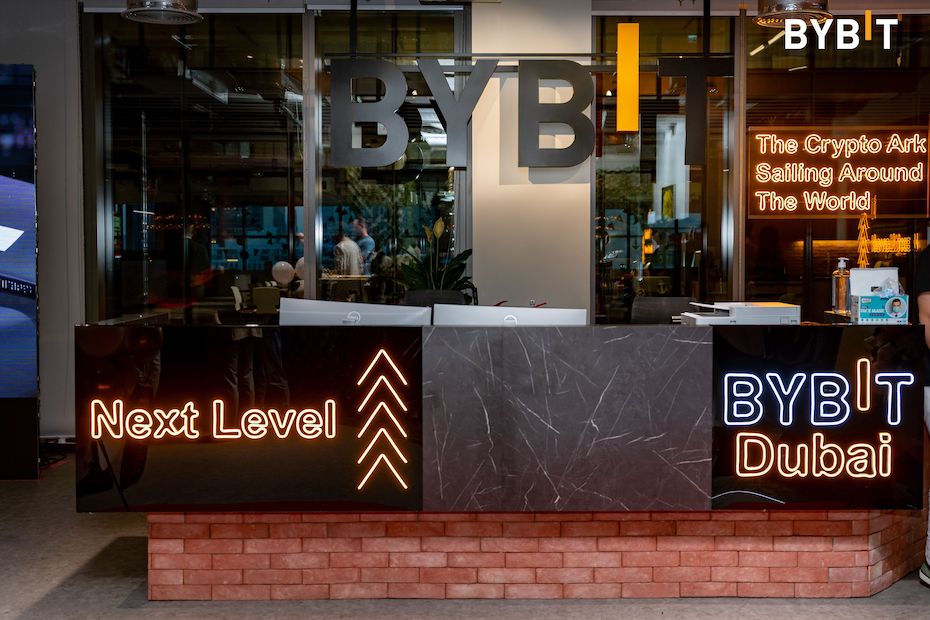
Bybit says its Dubai entity has secured a Virtual Asset Service Provider licence from the Virtual Assets Regulatory Authority for exchange services covering spot trading. However, VARA’s public register still lists Bybit Fintech FZE as holding In-Principle Approval, not a full VASP licence. VARA says an IPA is conditional and prohibits the holder from operating, conducting virtual asset activities or servicing clients until it obtains the full licence. The difference is material to the status of the Dubai service.
Company Announcement and Regulator Register Do Not Yet Match
Bybit’s announcement describes the approval as a VASP licence for Exchange Services and says the scope covers spot trading. It presents the development as a milestone for the company’s Dubai business, where Bybit established its international headquarters in 2022. Chief Executive Ben Zhou said the company was pleased to take the next step and would continue building in line with VARA’s standards.
The regulator’s live register, checked for this draft, identifies Bybit Fintech FZE as an In-Principle Approval applicant. It lists Exchange Services as the activity associated with the application but does not show a full active licence. VARA explains that an IPA allows applicants to complete outstanding requirements in the licensing process. Its register also states that IPA holders cannot begin operations or serve clients until the full VASP licence is granted.
The discrepancy may reflect a delay in updating the public register after a recent regulatory decision, or a difference between the company’s description and the regulator’s recorded status. The available information does not establish which explanation applies. Until VARA’s public record changes or the regulator confirms the grant, the licence should be attributed to Bybit’s announcement rather than stated as independently verified.
That distinction is not merely editorial. A full licence and an in-principle approval carry different permissions. Bybit’s 2024 announcement described its prior approval as provisional and non-operational, and VARA’s current register explains that IPA holders cannot provide services. The new company statement may signal progress, but the public record remains the authoritative point for confirming the licensed entity, activity, status and permitted client operations.
Licence Scope Is Limited to Exchange Services
Bybit’s announcement says the licence covers exchange services for spot trading. It does not say that the entity is now licensed to offer derivatives in Dubai. Peter Loo, Bybit’s Chief Legal and Compliance Officer, said the company hopes to expand its licensed activities to include derivatives in the future, subject to the required approvals. That statement indicates derivatives are not part of the activity Bybit says it has secured at this stage.
For a global exchange, entity-specific permissions matter because the same brand can operate through different companies in different jurisdictions. A user needs to know which legal entity provides a particular service, where that entity is licensed and what products the authorization covers. A spot exchange permission does not automatically authorize derivatives, custody, staking, lending or other virtual asset activities.
VARA’s register reflects this activity-based approach. Other providers in Dubai appear with specific combinations of services, and the regulator’s public information distinguishes full licences from in-principle approvals. For example, some firms are listed with Exchange Services, while others have Broker-Dealer Services or permissions that expressly include derivatives. The categories are not interchangeable, and a licence for one business line cannot be treated as a blanket approval for every product offered by a group.
FinanceFeeds has covered other Dubai approvals where the distinction between conditional approval and operational permission mattered, including Flipster’s full exchange licence and the scope of Flowdesk’s VARA authorisation. Bybit’s own earlier provisional approval was also described as non-operational. The current register therefore needs to be read alongside the company’s statement.
Bybit Says Dubai Is Part of a Wider Licensing Push
Bybit frames the Dubai development as part of a broader 2026 effort to secure regulatory approvals in multiple markets. The company’s announcement refers to progress in the European Union, the Cayman Islands, Indonesia, South Africa and El Salvador. Those approvals relate to different entities, activities and legal frameworks, so they do not establish the status of the Dubai application or determine what products Bybit Fintech FZE can provide there.
That broader push reflects a market in which large crypto platforms are increasingly presenting licensing as part of their expansion strategy. The commercial benefit can include a clearer route to serve clients in a jurisdiction, but the permission is specific to the entity and services named by the regulator. A firm may have a licence in one market and still need separate approval for another product or customer group.
Dubai is an important market in Bybit’s corporate footprint, and the firm says its international headquarters are located there. The company has participated in the emirate’s digital asset ecosystem through industry engagement and local initiatives. Those activities provide context for its stated commitment to the market, but they do not alter the regulatory status recorded in VARA’s register.
Derivatives Expansion Remains Subject to Approval
Bybit’s stated interest in adding derivatives is commercially significant because derivatives are a major part of its global trading business. However, the company itself says any such expansion would be subject to the necessary regulatory approvals. Traders in Dubai should therefore distinguish between the spot activity named in the announcement and any future derivatives service that may require a separate permission or variation to the licence.
The distinction also matters for risk controls and client disclosures. Spot trading involves buying and selling virtual assets, while derivatives can create leveraged exposure and additional liquidation risk. Regulators may apply different requirements to each activity, including rules on client classification, risk warnings, custody, margin and market conduct. A licence for spot exchange services does not demonstrate that those requirements for derivatives have been met.
Bybit said it continues to invest in compliance, security and risk management as it develops products across jurisdictions. Loo described strong oversight and risk management as necessary to a healthy digital asset market. Those commitments are company statements; the public register provides the current regulator-side evidence of the entity’s status. An update from VARA would resolve whether the licence announcement has moved from an in-principle stage to an active authorization.
Register Update Will Be the Next Confirmation Point
For now, the company’s statement and the regulator’s record should be reported separately. Bybit says it has secured a Dubai VASP licence for spot exchange services. VARA’s public register, as checked for this article, still identifies Bybit Fintech FZE as an IPA holder. VARA says such applicants cannot operate or serve clients until a full licence is obtained.
The wording can change once the register is updated or VARA confirms the grant. Until then, describing the licence as fully active without qualification would go beyond the regulator’s current public record. The announcement is still a potential milestone in Bybit’s Dubai licensing process, but the exact point at which the company can begin the covered activity remains subject to confirmation from the regulator’s official status listing.
The development also leaves a clear distinction for clients: the announced scope is spot exchange services, while derivatives remain a possible future expansion. Bybit’s international regulatory progress may support its long-term strategy, but each market and product must be assessed on its own permissions. The next material update will be whether VARA changes the entity’s listing from In-Principle Approval to an active VASP licence and confirms the services that may be provided.